Energy Performance Certificates (EPC)

Residential & Commercial EPCs

Energy performance certificates

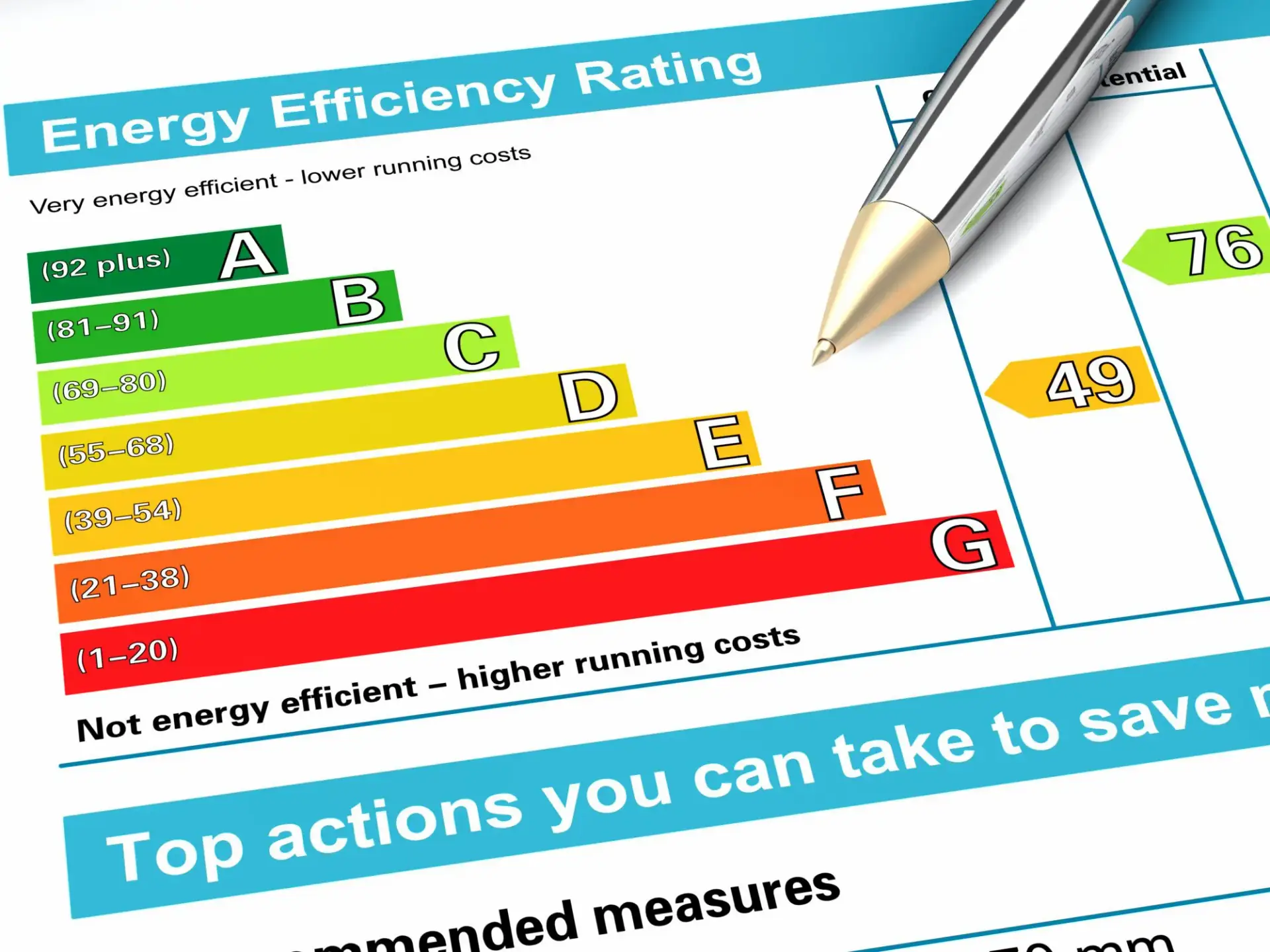
In the current UK property landscape, an Energy Performance Certificate (EPC) is much more than a mandatory document, it is the baseline for your property’s future value and legal rentability. An EPC measures the energy efficiency of a building on a scale from A (most efficient) to G (least efficient) and is a legal requirement whenever a property is built, sold, or rented.

With the government’s recent “Warm Homes Plan” announcements and the proposed trajectory toward a minimum EPC C rating for all rental properties by 2030, landlords and homeowners are navigating a critical transition. While many of the stricter requirements are currently in the consultation phase, the shift toward a “fabric-first” approach prioritising insulation and windows, is already influencing buyer and tenant behaviour across the South East.


Why is an EPC Legally Required?

Under the Minimum Energy Efficiency Standards (MEES), having a valid EPC is a strict legal obligation for several reasons:

  • Letting & Sales: You cannot lawfully market a property for sale or rent without a valid EPC. Since April 2020, it has been unlawful to let a property with a rating below Band E unless a specific exemption is registered. To ensure full compliance for a new tenancy, most landlords also require an Electrical Safety Certificate (EICR) and a Gas Safety Certificate (CP12).
  • The “Section 21” Risk: For landlords, failing to provide a tenant with a valid EPC at the start of their tenancy can legally block your ability to serve a Section 21 notice later.
  • Hefty Penalties: Local authorities actively enforce compliance. Failure to provide an EPC can result in fines of up to £5,000 per property, and under new 2026 proposals, penalties for non-compliance with future standards are expected to rise significantly.


How a Domestic EPC Assessment Works

At First Certify, we provide a comprehensive look at your property’s efficiency through a professional domestic assessment. A qualified Domestic Energy Assessor (DEA) will visit your property for a non-invasive survey, typically lasting 30 to 60 minutes. We examine:

  • Building Fabric: Wall construction, loft insulation, and glazing types.
  • Heating & Hot Water: Boiler efficiency, heat pumps, and heating controls.
  • Renewable Energy: Solar PV or thermal systems.
  • Lighting: The ratio of low energy fixed lighting.


Using the latest RdSAP 10 methodology, we process this data to produce your certificate and a set of tailored recommendations. To help market your property more effectively, we can also provide Comprehensive Floor Plans. In 2026, this system has partially moved away from “assumptions,” meaning evidence (like invoices for insulation) is now vital for an accurate score.

Have you checked if you already have an EPC?

You can do so, for free, on the official UK government register.

Knowing your EPC status is essential, whether you’re looking to sell, rent, or improve energy efficiency. You can quickly and easily check if your property already has a valid EPC by visiting the official UK government register. This ensures you stay compliant with regulations and gives you a clear starting point if an updated certificate is needed. If you still require an EPC, you can Book Online Here.

Frequently Asked Questions

Q: How long does an EPC assessment take?

An EPC assessment typically takes less than an hour. However, the duration may vary depending on the complexity of the property’s layout, such as loft conversions, extensions, or other unique features.

Q: Do I need to be present during the EPC assessment?

While it’s not necessary for you to be present during the assessment, it can be helpful to answer any questions the assessor may have about the property. The assessment usually involves a walk-through to gather information about the building’s energy use.

Q: How long is an EPC certificate valid for?

An EPC certificate is valid for 10 years. However, you may want to have your property reassessed sooner if you’ve made significant improvements to its energy efficiency.

Q: Is an EPC required for renting out my property?

Yes, in the UK, an EPC is required for properties being rented or sold. Landlords must provide a valid EPC to tenants at the start of a tenancy. The rating must be at least an E to meet legal requirements.

Sussex

  • Brighton & Hove

  • Crawley

  • Worthing

  • Bognor Regis

  • Eastbourne

  • Hastings

  • Lewes

  • Shoreham-by-Sea

  • Littlehampton

  • Burgess Hill

  • Haywards Heath

  • Lancing

London

  • Central London

  • North London

  • South London

  • East London

  • West London

  • Greater London Area

Kent

  • Maidstone

  • Canterbury

  • Tunbridge Wells

  • Dover

  • Ashford

  • Folkestone

  • Chatham

  • Rochester

  • Gillingham

We're proudly rated 5 stars by our clients.

Are you an EPC assessor?

Join our growing network of DEAs & NDEAs

Join Our Team of Accredited EPC Assessors First Certify is expanding, and we are looking for qualified Domestic Energy Assessors (DEAs) to cover Sussex, London, and the South East. As the property market prepares for the 2026 EPC reforms and the 2030 compliance targets, we are seeing a record demand for energy assessments. We offer our assessors steady, reliable work with a professional back-office team that handles the admin so you can focus on the inspection. If you value flexible scheduling, competitive rates, and a well-organised workflow, we would love to hear from you. Join a forward-thinking company that supports your professional growth in the energy sector.

Our Service Areas

We provide professional EPCs and property certification in the following locations:

First Certify provides compliance certification for landlords and agents across the UK.
Contact us if your area is not listed.

Have a question? We'd love to hear from you!

Have a question about your property compliance? Get in touch via our Contact Form, email us at support@firstcertify.co.uk or call 0330 133 2503 to speak with a member of our team. You can also follow us on Facebook and Instagram for the latest industry updates.